
Florida Plumbing Guide
Why Won’t My Toilet Stop Running? Causes and Safe Checks
A toilet that keeps refilling can waste water, raise utility costs, and signal a worn or misadjusted tank component. A few observations can help identify the likely cause without overlooking a hidden leak.
A running toilet usually means water is escaping from the tank into the bowl or the fill valve is not shutting off at the correct level. The sound may be constant, or it may return every few minutes as the tank quietly refills.
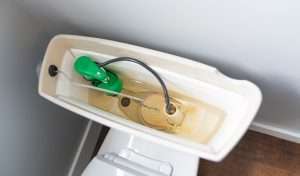
Three Common Reasons a Toilet Keeps Running
- The flapper is not sealing. A warped, worn, dirty, or incorrectly sized flapper lets tank water leak into the bowl.
- The chain is incorrectly adjusted. A chain that is too short can hold the flapper open. One that is too long can become trapped beneath it.
- The fill level or fill valve is incorrect. A misadjusted float or failing fill valve can send water into the overflow tube instead of shutting off.
Other possibilities include a damaged flush-valve seat, a cracked overflow tube, a sticking handle, or deterioration inside an older tank.
Start by Watching One Flush
Remove the tank lid carefully and place it on a stable surface. Flush once and observe the parts without putting your hands into the moving mechanism. The flapper should rise, fall squarely onto its seat, and seal. The tank should refill to its marked water line, and the fill valve should stop before water continuously enters the overflow tube.
If water reaches the top of the overflow tube, the likely concern is the float adjustment or fill valve. If the water level remains below the overflow but the toilet periodically refills, water is probably leaking past the flapper or another tank seal.
How Can I Check for a Silent Leak?
When the bowl is clear and no cleaner is present, a few drops of ordinary food coloring can be placed in the tank. Do not flush for about 15 to 20 minutes. Color appearing in the bowl indicates that tank water is leaking through even if the toilet is quiet.
Flush afterward so the coloring does not remain in the fixture. This check identifies leakage but does not prove which component has failed.
Safe Homeowner Checks
- Confirm that the handle returns freely after flushing.
- Look for a disconnected, tangled, or trapped chain.
- Check whether the flapper sits flat on its opening.
- Observe whether water is continuously entering the overflow tube.
- Look around the tank, bowl, supply line, and floor for visible leakage.
If water is reaching the floor, close the toilet’s accessible supply valve without forcing it and contact a plumber. A stiff, corroded, or leaking shutoff valve should not be forced because it may fail.
When Should a Plumber Repair It?
Professional service is appropriate when the toilet leaks outside the fixture, the shutoff valve does not operate, tank components are corroded or unfamiliar, the fixture rocks, the bowl backs up, or simple adjustments do not stop the cycling. Cracks in the tank or bowl require prompt attention and usually fixture replacement.
A plumber can also determine whether high water pressure or another system condition is shortening the life of toilet components throughout the home.
What a Home Inspector Checks
During a buyer home inspection, the inspector operates accessible toilets when conditions permit and observes flushing, refilling, stability, visible leakage, and surrounding finishes. The inspection is visual and does not dismantle the tank or perform invasive drain testing.
Frequently Asked Questions
Why does my toilet run every few minutes?
Intermittent refilling usually means tank water is slowly escaping into the bowl, often past the flapper or flush-valve seal.
Is a running toilet an emergency?
It is usually not an immediate emergency when water remains inside the fixture, but it wastes water and should be corrected. Leakage onto the floor, a cracked fixture, or an overflowing bowl requires prompt action.
Can high water pressure cause toilet problems?
Excessive pressure can contribute to noise, leaks, and premature wear in plumbing components. A plumber can measure the system and diagnose the cause.
Should I replace the whole toilet?
Many running-toilet problems involve serviceable tank parts. Replacement may make sense when the porcelain is cracked, repairs are recurring, parts are unavailable, or the fixture is inefficient and near the end of its useful life.
Schedule a South Florida Home Inspection
GGR Home Inspections evaluates accessible plumbing fixtures during a comprehensive home inspection. Call 305-908-7050 or schedule online.
Continue Learning

Pingback: home care