
Practical homeowner guide
Roots in Sewer Lines: Causes, Warning Signs, and Repairs
Learn why roots enter damaged sewer piping, how camera inspections locate defects, and which removal or repair options buyers may encounter.
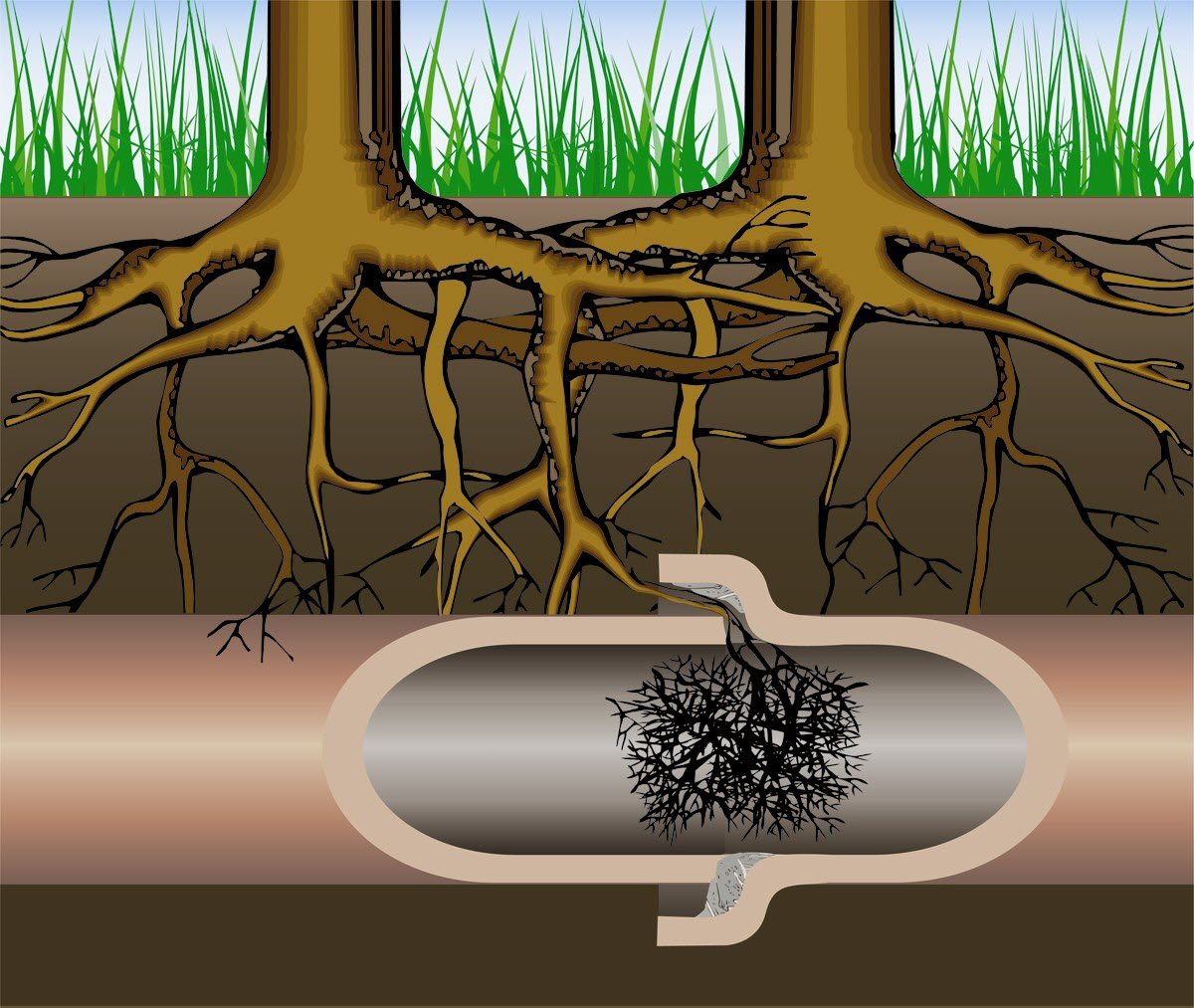
Tree and shrub roots enter sewer lines through cracks, failed joints, damaged connections, and other openings. Once inside, roots can catch debris, restrict flow, and contribute to backups. Root removal restores space temporarily, but the pipe defect still needs evaluation.
How roots get into sewer lines
- Separated or leaking joints.
- Cracks in clay, cast iron, concrete, or other piping.
- Failed transitions between different materials.
- Openings around connections.
- Corrosion or structural deterioration.
Warning signs
- Recurring slow drains or backups at the lowest fixtures.
- Gurgling when multiple fixtures discharge.
- Repeated need for drain cleaning.
- Sewage odor or wet areas near the sewer route.
- Large trees near an older lateral.
How the problem is confirmed
A sewer camera can document the location and extent of intrusion, pipe material, offsets, standing water, cracks, and other defects. The line often must be cleaned first. Camera visibility may still be limited by water, grease, debris, bends, or access.
Root-removal methods
Mechanical cutting
Cutting heads can remove masses and reopen flow, but roots may return through the same defect.
Hydro jetting
High-pressure cleaning may remove roots and debris when the pipe can tolerate the process. Fragile piping requires caution.
Chemical root control
Products may slow regrowth in some situations, but they do not repair the pipe. Follow professional and environmental guidance.
Repair options
- Localized excavation and spot repair.
- Cured-in-place lining when the host pipe is suitable.
- Pipe bursting or full replacement.
- Correcting improper transitions or alignment.
Lining does not correct every belly, collapse, or major offset. Compare the video findings with the proposed repair.
Buyer questions
- Can the seller provide a recent sewer-scope video?
- Was the line cleaned before the camera inspection?
- Where is the defect relative to the house and property line?
- Who owns the affected section?
- Are permits, warranties, and final videos available for prior repairs?
Frequently asked questions
Will cutting roots solve the problem permanently?
Usually not if the opening remains. Regrowth is likely until the defect is repaired or managed.
Should the tree be removed?
Not automatically. Repairing the sewer defect may be more relevant. Consult sewer and tree professionals before removing mature landscaping.
Does a home inspection include a sewer camera?
Not normally. Sewer scoping is a separate specialized service.
Related resources