
Practical homeowner guide
Dishwasher Drain Hose Connection: Air Gaps and High Loops
Learn where the drain hose connects, how air gaps and high loops differ, and which visible defects can cause leakage or dirty-water backflow.
A dishwasher drain hose must carry wastewater to the sink drain or disposer without allowing dirty water to flow back into the appliance. The correct connection depends on the dishwasher instructions, local requirements, and whether an air gap or high loop is used.
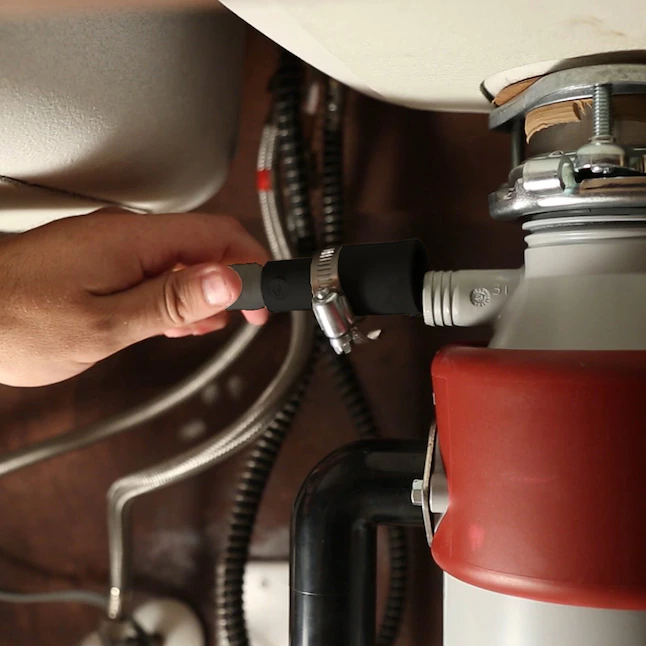
Common drain-hose connections
Garbage-disposer connection
The hose connects to the disposer’s dishwasher inlet. On a new disposer, the factory knockout must be removed before connecting the hose.
Sink-tailpiece connection
A branch tailpiece provides a dedicated hose connection above the trap. The fitting must be compatible and securely clamped.
Countertop air gap
The dishwasher hose runs to an air-gap device above the sink or counter, and a second hose runs to the disposer or tailpiece. The air gap provides a visible physical break against backflow.
What is a high loop?
The hose is secured as high as practical beneath the countertop before descending to the drain connection. This arrangement can reduce backflow risk where permitted and specified, but a loose hose lying on the cabinet floor is not a high loop.
Installation checklist
- Confirm the manufacturer’s routing instructions.
- Use an approved air gap or properly secured high loop as required.
- Connect upstream of the sink trap.
- Remove a disposer knockout when applicable.
- Use the correct hose size, fitting, and clamp.
- Avoid kinks, crushing, excessive length, and low spots.
- Run a full cycle and check every connection for leakage.
Common defects
- Missing air gap where required.
- Hose not secured high beneath the counter.
- Connection downstream of the trap.
- Disposer knockout still in place.
- Loose clamp or damaged hose.
- Leakage, odor, standing water, or repeated drain errors.
Frequently asked questions
Why is water returning to the dishwasher?
A low hose, blocked disposer or sink drain, clogged air gap, kink, or improper connection may contribute. Diagnose the drainage path before replacing the appliance.
Can the hose connect after the P-trap?
It should connect on the fixture side of the trap using an approved arrangement.
Why does the air gap spill water?
The downstream hose or disposer connection may be blocked, kinked, or restricted. Cleaning or repair may be needed.
Related resources