Seawall Failure Signs: Causes, Inspection, and Repair Planning
Cracking, leaning, soil loss, sinkholes, joint separation, corrosion, and drainage problems can signal deterioration in a waterfront retaining system.
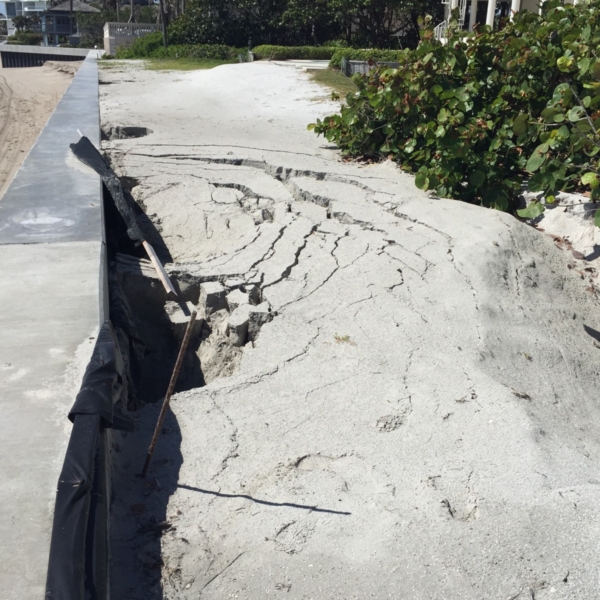
Seawalls resist soil and water forces while allowing controlled drainage. Failure can involve panels, caps, tiebacks, anchors, joints, footings, backfill, or adjacent docks and utilities.
Common failure mechanisms
Water-level changes, wave action, vessel wakes, corrosion, poor drainage, undermining, overloading, tree roots, and aging materials can contribute.
Escaping backfill through joints or beneath the wall may create voids behind the cap.
What owners can monitor
Photograph cracks and alignment from consistent points, watch soil elevations, keep drains clear, and note changes after storms or unusually high water.
Do not conceal movement with cosmetic patching before the cause is understood.
Plan qualified repairs
Marine work may involve engineering, permits, environmental requirements, access, neighboring structures, utilities, and specialized contractors.
Obtain a scope that addresses the failure mechanism instead of only filling visible voids.
Warning signs to address
- New sinkholes behind the wall
- Leaning, bowing, or displaced panels
- Rust staining or exposed reinforcement
- Open joints and loss of backfill
What a home inspection can document
A general home inspection can document visible conditions from safely accessible areas. Structural, underwater, tieback, and repair design evaluations require specialists.
A visual inspection cannot predict every failure or replace evaluation by the appropriately licensed specialist. It can identify visible concerns, explain why they matter, and help owners plan qualified follow-up.
Need a clearer picture of the property?
GGR Home Inspections provides clear, photo-documented inspections across Miami-Dade, Broward, Palm Beach, and St. Lucie counties.