

Practical homeowner guide
Loose Toilet Warning Signs, Causes, and Safe Repairs
A toilet that rocks or shifts is more than an annoyance. Movement can damage the wax seal, loosen connections, hide leakage, and worsen deterioration around the flange or subfloor.
A toilet that rocks or shifts is more than an annoyance. Movement can damage the wax seal, loosen connections, hide leakage, and worsen deterioration around the flange or subfloor.
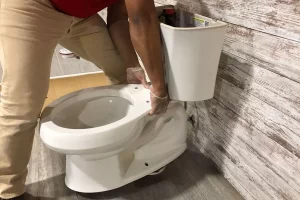
Common causes
Loose closet bolts, an uneven floor, missing support, a damaged flange, corrosion, poor installation, or deteriorated flooring can allow movement.
Why movement matters
Rocking can compromise the seal between the toilet and drain flange. Leakage may damage flooring and ceilings below, contribute to odors, or support microbial growth.
Look for related evidence
Check for staining, soft flooring, cracked caulk, corrosion, water at the base, movement at the tank, or recurring sewer odors. A dry surface does not rule out concealed damage.
Avoid overtightening
Tightening bolts unevenly or too aggressively can crack the porcelain. Shims and caulk cannot compensate for a broken flange or damaged subfloor.
When to call a plumber
Stop using the fixture if it leaks, shifts significantly, or the floor feels soft. A qualified plumber can remove the toilet, inspect the flange and floor, replace the seal, and reset the fixture correctly.
Frequently asked questions
Can a home inspection confirm every hidden condition?
No. A standard inspection is visual and non-invasive. Accessible evidence is documented, and further specialist evaluation is recommended when needed.
When should a specialist be called?
Seek qualified help when there is an active safety concern, water intrusion, uncertain installation, specialized testing need, or repair beyond ordinary homeowner maintenance.
Related resources




Pingback: Why Won’t My Toilet Stop Running? 3 Possible Reasons - GGR Home Inspections
Pingback: Best Moisture Meters For Wood Under $50 - GGR Home Inspections