

Practical homeowner guide
Dishwasher Venting: High Loops, Air Gaps, and Drainage
A dishwasher drain connection must limit dirty sink water from flowing back toward the appliance. The approved arrangement depends on local requirements and the appliance instructions.
A dishwasher drain connection must limit dirty sink water from flowing back toward the appliance. The approved arrangement depends on local requirements and the appliance instructions.
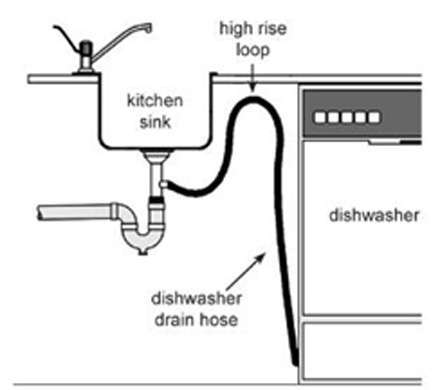
What a high loop does
The drain hose is secured high beneath the countertop before it connects to the disposal or sink drain. This routing reduces the chance that wastewater at the connection will flow back into the dishwasher.
How an air gap differs
A countertop air gap provides a physical break in the drainage path. Some jurisdictions or installations require it. A decorative cap is only useful when the hoses beneath it are connected correctly and remain clear.
Common defects
Inspectors often find a hose lying low in the cabinet, a loose or kinked line, leakage at clamps, an unused disposal knockout, improper connection location, or staining that suggests recurring backup.
Safe homeowner checks
Look for moisture after a cycle, verify the hose is supported, and keep the sink or disposal draining freely. Turn off power and water before service. Do not reach into a disposal or dismantle a connection while energized.
Inspection limitations
Operation during an inspection can reveal visible leakage or drainage symptoms, but it cannot confirm every concealed hose condition or predict future appliance failure.
Frequently asked questions
Can a home inspection confirm every hidden condition?
No. A standard inspection is visual and non-invasive. Accessible evidence is documented, and further specialist evaluation is recommended when needed.
When should a specialist be called?
Seek qualified help when there is an active safety concern, water intrusion, uncertain installation, specialized testing need, or repair beyond ordinary homeowner maintenance.
Related resources

Pingback: Dishwasher Air Gap: Why Do We Need Them? 2022 - GGR Home Inspections