
Florida Electrical & HVAC Guide
HVAC Circuit Breakers: Safety, Sizing, and Tripping
An HVAC breaker protects conductors and equipment from excessive current. A breaker that trips repeatedly is warning about a problem—not asking to be reset again or replaced with a larger size.
Most central HVAC systems use more than one electrical circuit. The outdoor condenser or heat pump may have a two-pole breaker, while the indoor air handler, furnace, electric heat kit, or condensate pump may be supplied separately. Labels can be incomplete or wrong, so the word “AC” on one breaker may not identify every HVAC disconnect.
What the HVAC Breaker Does
A circuit breaker opens the circuit when current exceeds its operating limits because of an overload, short circuit, or ground fault. It primarily protects the branch-circuit wiring and equipment connection. It does not replace the disconnect located near HVAC equipment, internal fuses, or manufacturer safety controls.
Why HVAC Equipment May Have Several Disconnects
- An outdoor condenser or heat pump usually has a nearby disconnect.
- An indoor air handler or furnace may have a separate breaker and service switch.
- Electric auxiliary heat may require additional breakers.
- A condensate pump or accessory may use another circuit.
- Multi-unit buildings may have panels or disconnects in different locations.
Turning off one visible breaker does not prove that every conductor inside the equipment is de-energized.
How HVAC Breaker Size Is Determined
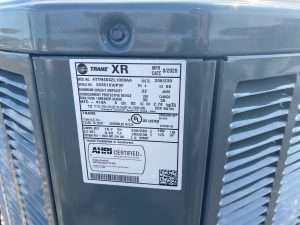
The correct breaker is not chosen from the equipment’s cooling capacity alone. The outdoor-unit nameplate commonly lists a minimum circuit ampacity and maximum overcurrent protection value. Conductors, breaker type, terminals, disconnect, heat kits, and local requirements must all be coordinated.
Never install a larger breaker to stop tripping. Oversizing can leave conductors or equipment inadequately protected and create a fire risk.
Why an HVAC Breaker Trips
- A shorted conductor or failed electrical component.
- A compressor, fan motor, blower, or heat-strip problem.
- Loose, overheated, or damaged connections.
- Water intrusion or a ground fault.
- A breaker or disconnect defect.
- Incorrect circuit sizing or equipment configuration.
- Excessive mechanical load or an equipment failure that raises current.
A dirty filter can contribute to HVAC operating problems, but it does not justify repeatedly resetting a breaker. Electrical and mechanical diagnosis may both be needed.
Can a Homeowner Reset a Tripped Breaker?
If a breaker is clearly tripped, there is no burning odor, heat damage, water, or visible electrical defect, and the equipment instructions do not prohibit it, a homeowner may reset it once by moving it fully Off and then On. If it trips again, leave it off and call a qualified HVAC technician or electrician.
Do not open an outdoor disconnect enclosure, replace fuses, remove panel covers, touch internal components, or hold a breaker in position.
Warning Signs Requiring Prompt Service
- Repeated or immediate breaker trips.
- Burning odor, buzzing, arcing, or smoke.
- A hot breaker, panel, disconnect, or cable.
- Discoloration, melted insulation, or corrosion.
- Water near electrical equipment.
- Improvised wiring, double-tapped terminals, or missing covers.
- A breaker size that exceeds the equipment nameplate maximum.
What a Home Inspector Checks
During a buyer home inspection, the inspector observes accessible HVAC electrical connections, disconnects, panels, breakers, conductor conditions, and equipment nameplates. Apparent sizing conflicts, damage, overheating, missing covers, corrosion, or unsafe access may be reported. The inspection does not include dismantling equipment or calculating every concealed conductor.
Frequently Asked Questions
Should the AC breaker match the unit’s tonnage?
No. Use the electrical data on the exact equipment and coordinate it with the installed conductors and protection.
Why does the outside unit have a disconnect and a breaker?
The breaker provides overcurrent protection at the panel, while the nearby disconnect provides a service isolation point. Some disconnects also contain fuses.
Can I replace a tripping breaker myself?
Breaker replacement requires correct diagnosis, compatible equipment, and safe panel work. Use a qualified electrician; replacing the breaker may not correct the underlying HVAC fault.
Schedule a South Florida Home Inspection
GGR Home Inspections evaluates accessible HVAC and electrical components during a comprehensive inspection. Call 305-908-7050 or schedule online.
Continue Learning

Pingback: How to Size the Air Conditioner Breaker - GGR Home Inspections