
Practical homeowner guide
Tiny Ants Around the Kitchen Sink: Causes and Safe Control
Learn why tiny ants gather near sinks, how to remove the conditions attracting them, and when a pest professional should inspect the home.
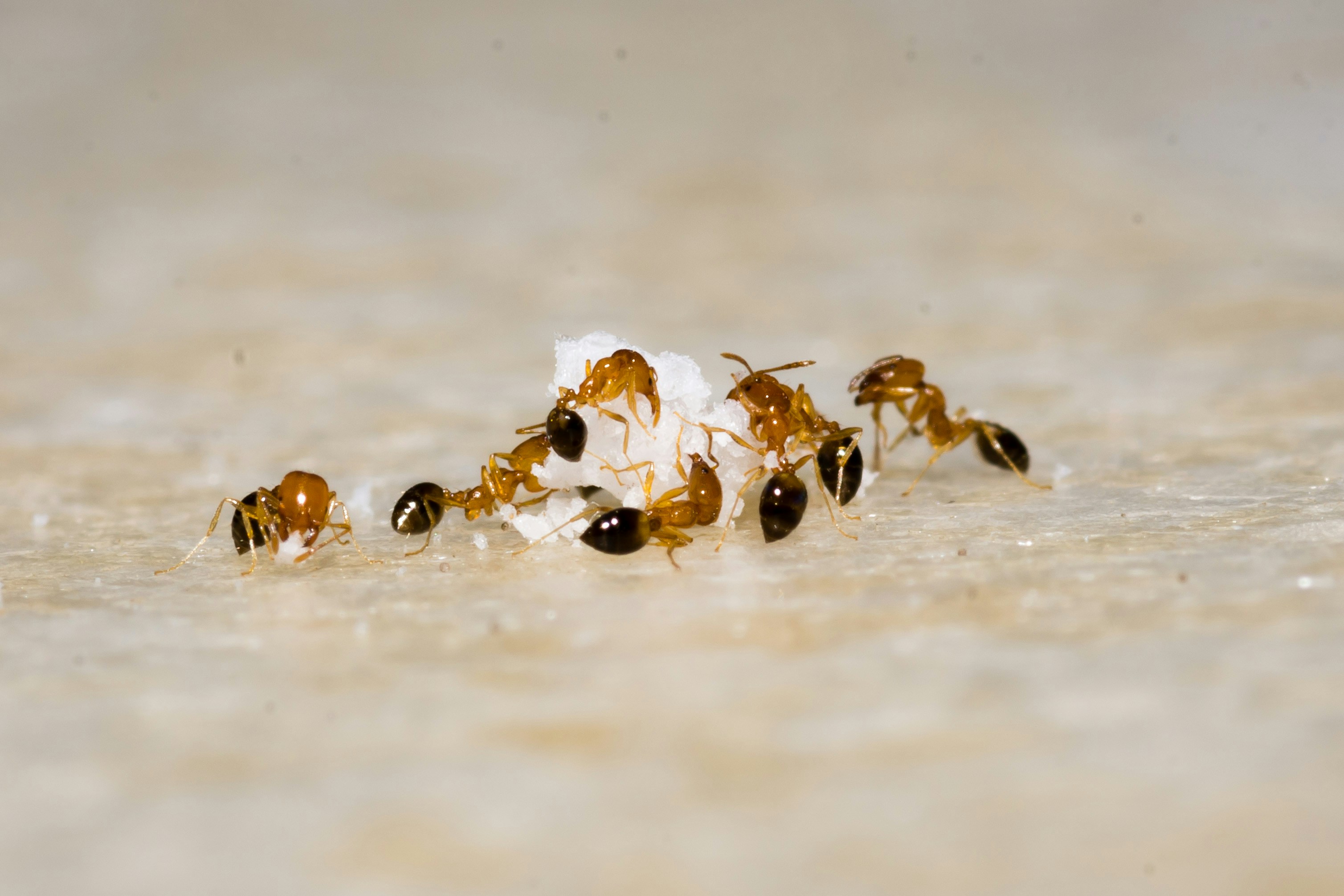
Small ants are usually searching for water, food, or both. Moisture around a faucet base, plumbing leak, wet sponge, unsealed food, grease film, or crumbs can create a dependable trail. In South Florida, warm weather allows colonies to remain active for much of the year.
Start with moisture
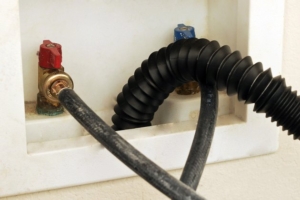
Dry the sink and counter each night, repair drips, inspect the cabinet for staining or swollen materials, and check supply and drain connections. A persistent damp area may signal a plumbing or building-envelope condition that deserves separate attention.
Remove food and trails
Clean crumbs and residue from counters, cabinet edges, appliance gaps, and trash areas. Use ordinary soap and water to erase visible trails. Store sweet and greasy foods in sealed containers and rinse recycling before storage.
Seal likely entry points
After activity is controlled, seal accessible gaps at pipe penetrations, backsplashes, trim, windows, and exterior wall openings. Do not seal active ants inside a wall without a control plan, and never block drainage or ventilation openings.
Use pesticides carefully
Spraying visible workers may scatter some colonies and rarely reaches the nest. Use products only as labeled, keep them away from food-preparation surfaces, children, and pets, and avoid mixing treatments. A licensed pest professional can identify the species and select a targeted approach.
What a home inspection can reveal
A home inspection is not a pest treatment, but it may document moisture damage, plumbing leaks, deteriorated sealant, and accessible entry conditions. Wood-destroying organism concerns require the appropriate specialist and inspection scope.
Frequently asked questions
Can a home inspection confirm every hidden condition?
No. A standard inspection is visual and non-invasive. Accessible evidence is documented, and further specialist evaluation is recommended when needed.
Should repairs be completed before closing?
Timing depends on the condition, contract, risk, and qualified estimates. Safety and active water concerns deserve prompt attention.
Related resources