
Practical homeowner guide
Smoke Detector Safety: Placement, Testing, and Replacement
Working smoke alarms provide early warning, but only when they are correctly located, powered, maintained, and replaced according to manufacturer guidance.
Working smoke alarms provide early warning, but only when they are correctly located, powered, maintained, and replaced according to manufacturer guidance.
Placement matters
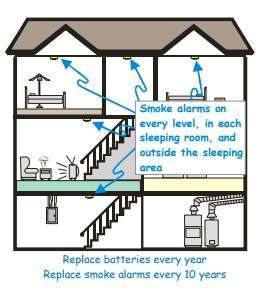
Current guidance commonly calls for alarms inside sleeping rooms, outside sleeping areas, and on every level. Local requirements and the home’s layout determine exact locations.
Test and maintain devices
Use the built-in test button regularly and follow manufacturer instructions for cleaning and battery replacement. Never paint a detector or disable it because of nuisance alarms.
Know the power source
Devices may be battery powered, hardwired with battery backup, or interconnected. A successful button test does not confirm every aspect of interconnection or smoke sensing.
Replace aging equipment
Smoke alarms have a limited service life. Check the manufacturing or replacement date and follow the manufacturer’s interval. Combination smoke and carbon-monoxide alarms may have different requirements.
Inspection limitations
Inspectors may test accessible alarms with built-in controls and report missing, damaged, or nonresponsive units. The inspection does not use smoke and cannot guarantee future operation.
Frequently asked questions
Can a home inspection confirm every hidden condition?
No. A standard inspection is visual and non-invasive. Accessible evidence is documented, and further specialist evaluation is recommended when needed.
When should a specialist be called?
Seek qualified help when there is an active safety concern, water intrusion, uncertain installation, specialized testing need, or repair beyond ordinary homeowner maintenance.
Related resources