South Florida Roofing Guide
Approved Roof Systems in Florida’s HVHZ
Florida’s High-Velocity Hurricane Zone has stricter roofing requirements than the rest of the state. Learn where the HVHZ applies, what an approved roof system means, and which records buyers and owners should verify.
Roofing in South Florida is not approved by material name alone. A roof covering, underlayment, fasteners, attachment pattern, deck type, slope, and other components must work together as an approved assembly and must be installed within that approval’s limits.
This matters most in Florida’s High-Velocity Hurricane Zone, commonly called the HVHZ. The zone has additional wind and wind-driven-rain requirements intended for the state’s highest-risk hurricane region.
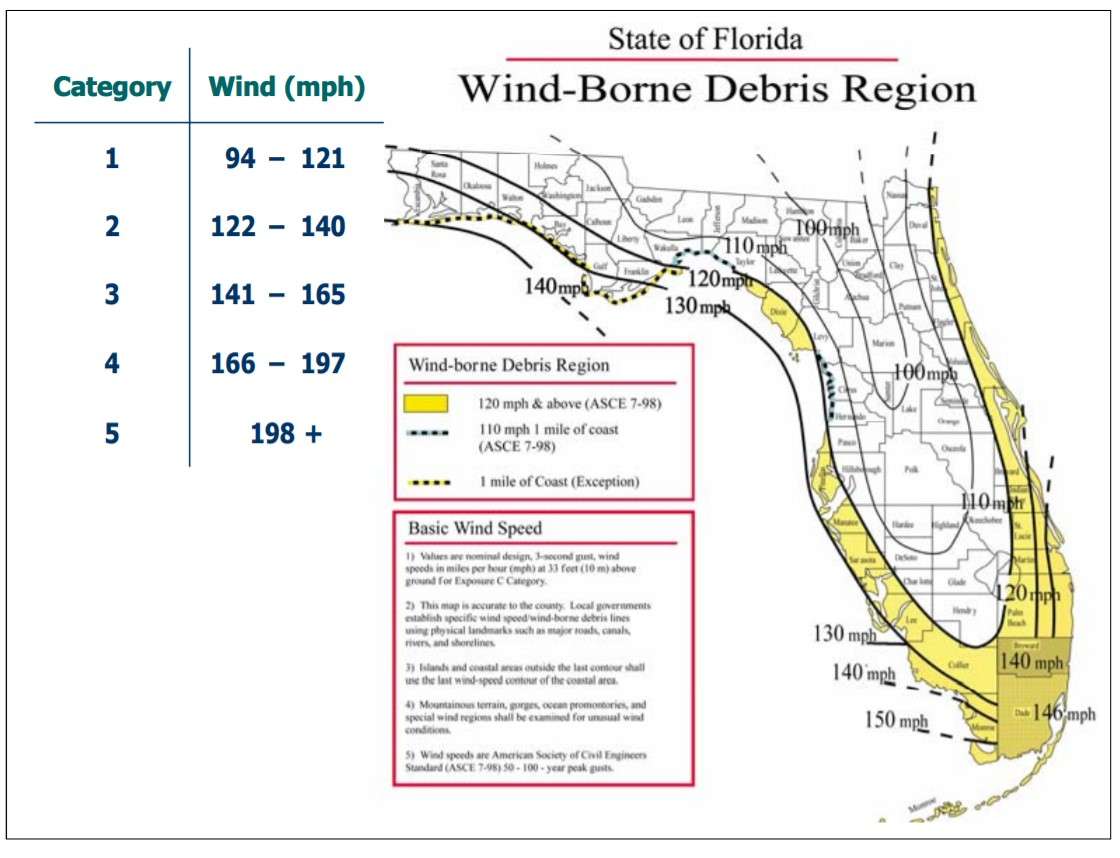
Where Is Florida’s HVHZ?
The Florida Building Code defines the High-Velocity Hurricane Zone as Broward County and Miami-Dade County. Palm Beach and Monroe Counties are not part of the HVHZ, although their projects still must meet the wind-design and product-approval requirements that apply at the specific property.
GGR Home Inspections serves clients throughout South Florida, but the code classification should always be based on the property’s jurisdiction—not on a general coastal map or an outdated article.
What Does “HVHZ Approved” Mean?
An HVHZ-approved product has documentation showing that it is accepted for use in the zone under stated conditions. Florida’s Product Approval database identifies whether a product is approved for HVHZ use. Miami-Dade County also issues Notices of Acceptance, usually called NOAs, for building-envelope products and systems.
An approval is not a blanket promise that a product can be used on every roof. Each approval contains limits and installation instructions. Those details may address the deck, roof slope, fastener type and spacing, design pressures, insulation, underlayment, attachment method, maximum building height, fire classification, or other conditions.
Which Roofing Materials Can Be Used?
Common roof-covering categories can have approved systems for the HVHZ, including:
- Asphalt shingles listed in a current approval and installed with the specified fastening and accessory requirements.
- Concrete and clay tile systems installed using an approved mechanical, adhesive, or combined attachment method.
- Metal roofing systems with approved panels, clips, fasteners, spacing, and substrate conditions.
- Low-slope and flat-roof systems, such as approved modified-bitumen, built-up, single-ply, or spray-applied assemblies.
- Slate or other specialty systems when the complete assembly has suitable approval and engineering for the project.
The important question is not simply, “Is metal, tile, or shingle roofing allowed?” It is, “Is this exact roof system approved for this building and installed according to its current documents?”
The Current Florida Building Code
As of August 2026, Florida is using the 8th Edition (2023) Florida Building Code, which became effective December 31, 2023. The Ninth Edition (2026) is scheduled to become effective December 31, 2026. Product approvals and NOAs should be checked against the code edition and project date that apply to the permit.
Use the official Florida Product Approval search to look up an FL number and confirm whether the listing says “Approved for use in HVHZ.” Miami-Dade County’s product-control records can be used to verify an NOA, its expiration date, and its limitations.
Documents to Request Before Buying or Re-Roofing
- The roof permit and final inspection record.
- The Florida product approval number or Miami-Dade NOA for the roof system.
- The manufacturer’s installation instructions and limits of use.
- Contracts, invoices, warranties, and photographs from the installation.
- Records for the roof deck, underlayment, secondary water resistance, and roof-to-wall connections when available.
These records can help a contractor, engineer, building official, home inspector, or insurance professional understand what was installed. Missing paperwork does not automatically prove a roof is defective, but it can make permitting, insurance, repairs, and future replacement more difficult.
What a Home Inspector Can—and Cannot—Confirm
During a buyer home inspection, the inspector evaluates visible roof-covering conditions, drainage, penetrations, flashing, accessible attic areas, and signs of leakage or deterioration. A wind mitigation inspection documents specific construction features for insurance review.
A visual inspection does not certify engineering, code compliance, or exact conformity with every line of a product approval. Many attachment details are concealed after installation. When the permit history or approval documentation is unclear, consult the local building department and an appropriately licensed roofing contractor or design professional.
Roof Life Depends on More Than the Material
Published service-life ranges are only estimates. South Florida sun, salt exposure, installation quality, roof geometry, ventilation, maintenance, storm damage, foot traffic, and repair history can shorten or extend performance. An older roof may remain serviceable, while a newer roof can develop problems if the assembly or installation is deficient.
Insurance underwriting rules are separate from the Florida Building Code. A code-compliant or approved system does not guarantee that every insurer will accept a roof at every age or condition. Ask the carrier for its current requirements before closing or beginning a major roofing project.
Frequently Asked Questions
Is Palm Beach County in the HVHZ?
No. The Florida Building Code’s HVHZ consists of Broward and Miami-Dade Counties. Palm Beach County still has significant wind-design requirements, but it is not an HVHZ jurisdiction.
Does a Miami-Dade NOA mean a product is hurricane-proof?
No. An NOA documents acceptance for specified uses and conditions. Performance still depends on correct system selection, installation, maintenance, building design, and storm exposure. No roof is hurricane-proof.
Can I verify a roof approval by the brand name?
Usually not with enough precision. A manufacturer may sell several products with different approval numbers, revisions, components, and limits. Use the exact FL number or NOA and compare the product, model, code edition, installation method, and expiration or approval status.
Does a home inspection replace a roofing permit search?
No. The inspection and permit records answer different questions. Buyers benefit from reviewing both, especially when roof age, insurability, or installation documentation may affect the purchase.
Schedule a South Florida Home Inspection
GGR Home Inspections helps buyers understand visible roof conditions and available documentation before closing. Call 305-908-7050 or schedule online.