
Electrical Service Drip Loops
Why overhead electrical service wires form a downward loop, what can go wrong, and when a licensed electrician should evaluate the installation.
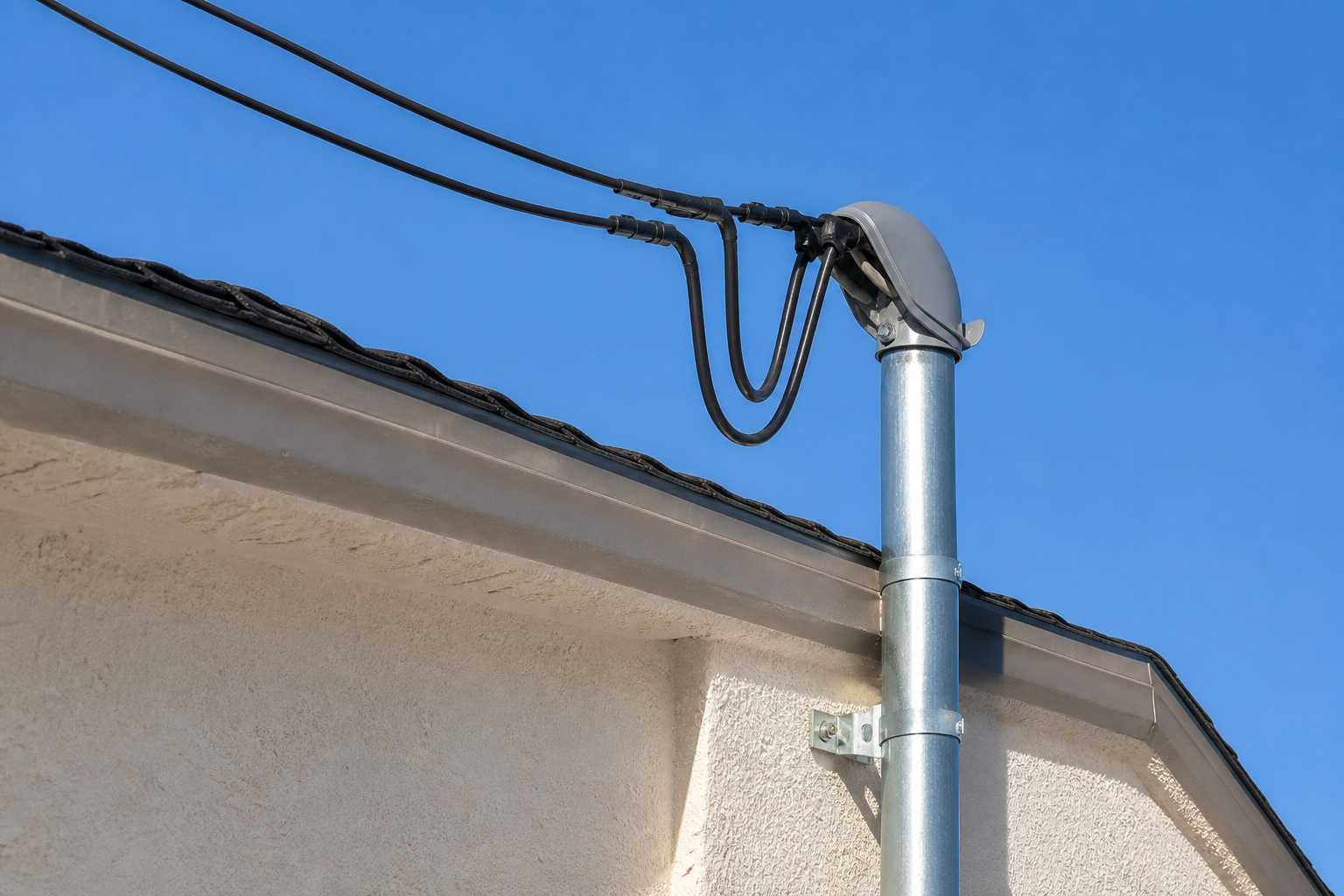
A service drip loop is the downward curve in overhead electrical conductors near the point where utility wiring connects to a home. Its purpose is simple but important: rainwater follows the wire to the lowest point and drips away instead of traveling toward the service head or electrical equipment.
How a drip loop works
Overhead service conductors typically approach the home, dip below the service-entrance connection, and then rise toward the weatherhead or attachment point. Gravity directs water to the bottom of the loop. The weatherhead helps shield the conductors as they enter the service mast or raceway.
Water reaches the low point and falls before it can follow the conductor toward the home.
A properly arranged connection reduces moisture exposure near electrical components.
The utility and electrician can maintain safe clearances and connection geometry.
Damage, loose connections, vegetation, and improper routing may be easier to identify.
Who is responsible for the drip loop?
Responsibility varies by utility and by the location of the service point. Utility-owned conductors are generally handled by the electric utility, while the service mast, weatherhead, attachment hardware, and customer-owned equipment may be the property owner’s responsibility. Contact the utility or a licensed electrician before arranging repairs.
Common drip-loop and service-entrance problems
Missing or poorly formed loop
Conductors that slope directly toward the weatherhead may allow water to travel toward the service entrance. A qualified professional should determine whether correction is needed.
Damaged insulation or exposed conductors
Weather, abrasion, tree contact, and age can damage conductor insulation. Arcing, sparking, heat damage, or exposed metal requires prompt professional attention.
Loose service mast or attachment
The service attachment must resist the tension of overhead conductors. Movement, leaning, corrosion, damaged roof flashing, or loose hardware may allow water intrusion or create an electrical hazard.
Vegetation contacting service wires
Palm fronds and tree branches can rub against conductors or strain attachments during storms. Do not trim near energized wiring yourself; contact the utility for guidance.
Inadequate clearances
Service conductors require appropriate separation from roofs, windows, balconies, pools, driveways, and walking surfaces. Clearance concerns should be evaluated by the utility or a licensed electrician.
What a home inspector evaluates
A visual home inspection commonly includes the accessible service entrance, attachment point, service mast or raceway, weatherhead, meter enclosure, and main electrical equipment. The inspector may report damaged components, unsafe clearances, corrosion, improper attachment, vegetation interference, or evidence of moisture intrusion.
The inspection does not involve touching energized service conductors, opening utility-sealed equipment, or determining ownership boundaries. Repairs should be coordinated with the appropriate utility and licensed electrical contractor.
Does a 4-point inspection examine the electrical service?
Yes. A Florida 4-point inspection documents key electrical-system information for insurance underwriting, including the service and main panel when accessible. GGR provides insurance inspections only in Miami-Dade, Broward, and Palm Beach counties.
Related inspection services
Need a clearer picture of the electrical system?
Schedule a thorough, photo-documented inspection with GGR Home Inspections.

Pingback: A Guide To Understanding Plumbing Bonding Wire