Florida Drainage and Sewer Guide
Floor Drain Backing Up: Causes, Warning Signs, and Next Steps
Water rising from a floor drain often means the drainage system cannot carry wastewater away fast enough. The location of the overflow does not necessarily identify the location of the blockage.
A floor drain is commonly one of the lowest open fixtures in a building. When a main drain or sewer lateral becomes restricted, wastewater may appear there before it reaches sinks or other higher fixtures. Treat sewage or contaminated water as a health hazard and keep people and pets away.
Why Is Water Coming Up Through the Floor Drain?
- A main building drain or sewer lateral is blocked. Roots, grease, wipes, deteriorated piping, foreign objects, or a collapsed section can restrict flow.
- A branch drain is clogged. If only one nearby fixture triggers the backup, the obstruction may be in that portion of the system.
- The municipal sewer is overwhelmed or obstructed. Heavy rain can contribute in some systems, but a plumber must determine whether the problem is private or public.
- A septic system is not accepting wastewater. A full tank, saturated drain field, or component failure may cause the lowest drain to overflow.
- Stormwater is entering improperly. Connected downspouts, foundation drainage, or infiltration can overload piping that was not designed for the flow.
Why Does It Back Up When the Washer Drains?
A washing machine releases a large volume of water quickly. If the drain is undersized, partially blocked, poorly vented, or otherwise defective, that surge may expose a problem that slower fixtures do not. The washer is not necessarily the source of the obstruction.
Stop using the washer and other water-producing fixtures until the cause is known. Continuing to add water can increase property damage and contamination.
What Should You Do Immediately?
- Stop flushing toilets, running faucets, using appliances, and adding water to the drainage system.
- Keep people and pets away from sewage or unknown water.
- Avoid contact with electrical equipment or outlets in the affected area.
- Call a licensed plumber or qualified drain professional.
- If the backup is widespread or weather-related, check whether the utility has reported a public sewer problem.
Do not mix drain chemicals, remove a cleanout cap under pressure, or use improvised high-pressure equipment. These actions can cause chemical exposure, uncontrolled sewage release, or pipe damage.
Does the Floor Drain Need Cleaning?
A local trap blockage can affect an individual floor drain, but water rising when other fixtures discharge usually points to a restriction farther downstream. Cleaning only the visible drain opening may not solve the underlying problem.
Recurring backups call for diagnosis rather than repeated temporary clearing. The plumber may recommend drain cleaning, locating the blockage, or a camera inspection after flow has been restored.
When Does a Sewer Scope Help?
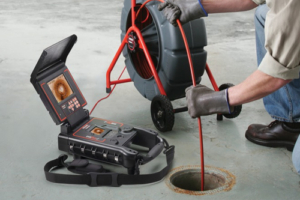
A sewer scope inspection uses a camera to observe accessible portions of the sewer lateral. It may identify roots, offsets, cracks, standing water, deterioration, or other visible concerns. A camera cannot see through a complete blockage, and cleaning may be needed first.
Scope findings should be interpreted with the property’s drainage symptoms and pipe material. Repairs and pricing vary significantly, so the old article’s generic cost figures have been removed.
Can a Sump Pump Prevent a Sewer Backup?
A sump pump manages groundwater collected in a sump basin. It is not a substitute for a functioning sanitary sewer and should not be assumed to solve sewage coming from a floor drain. Sanitary, stormwater, and foundation-drainage systems serve different purposes and should be evaluated separately.
How Can Future Backups Be Reduced?
- Do not flush wipes, hygiene products, grease, or other unsuitable material.
- Address recurring slow drains, gurgling, or sewer odors promptly.
- Maintain septic systems according to professional recommendations.
- Keep roots and large plantings away from known sewer routes when practical.
- Have damaged, bellied, or root-intruded piping evaluated rather than relying on repeated clearing.
- Consider a properly designed backwater valve only after professional evaluation.
What a Home Inspector Checks
During a buyer home inspection, the inspector observes accessible drains and plumbing fixtures, operates representative fixtures when conditions permit, and reports visible leakage, slow drainage, backups, or other apparent concerns. The inspection is not a sewer-line pressure test and cannot rule out concealed defects.
Frequently Asked Questions
Why is the floor drain the first place sewage appears?
It is often the lowest open point connected to the drainage system, so backed-up wastewater reaches it before higher fixtures.
Can heavy rain cause a floor-drain backup?
Yes, depending on the property and public infrastructure. Rain may overwhelm a combined or defective system, increase groundwater infiltration, or expose improper drainage connections.
Should I pour chemical cleaner into the drain?
No chemical reliably corrects every cause, and mixed or trapped products can endanger occupants and the plumber. Stop water use and obtain professional diagnosis.
Is backed-up water sanitary?
Assume water from a sanitary drain is contaminated. Avoid contact and use qualified cleanup assistance when building materials are affected.
Schedule a South Florida Home Inspection
GGR Home Inspections evaluates accessible plumbing and offers sewer-scope services where appropriate. Call 305-908-7050 or schedule online.
Continue Learning