
Florida Electrical Safety Guide
Can Neutrals and Grounds Share the Same Bar?
The answer depends on where the panel is located in the electrical system. Neutral and equipment-grounding conductors are bonded at the service disconnect, but they generally must remain separated in downstream panels.
Seeing white neutral wires and bare or green equipment-grounding wires on the same terminal bar is not automatically correct or incorrect. The decisive question is whether the enclosure is the service disconnecting means—the point where the building’s electrical service is first disconnected—or a panel located downstream from it.
At the service disconnect, the grounded conductor, commonly called the neutral, is bonded to the equipment-grounding system and enclosure. On the load side of that point, neutral current should stay on an insulated neutral path rather than flow over metal enclosures, grounding conductors, piping, or other normally non-current-carrying components.
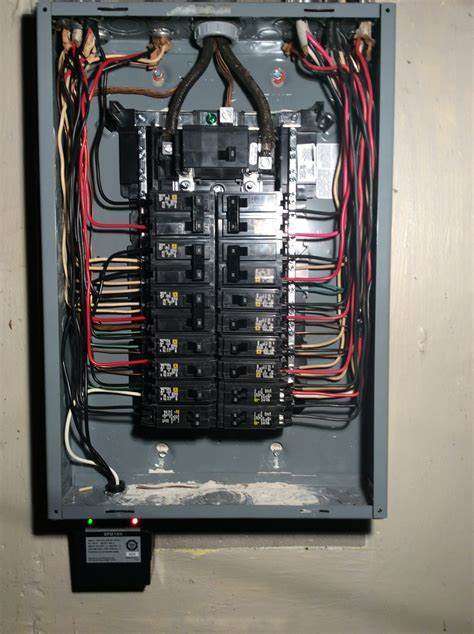
What Does the Neutral Conductor Do?
The neutral is a grounded circuit conductor that normally carries current back toward its source. In a properly operating 120-volt branch circuit, current travels to the load on an ungrounded, or “hot,” conductor and returns on the neutral.
Because the neutral normally carries current, it is not simply another ground wire. Treating it as interchangeable with an equipment-grounding conductor can place current on metal parts that should not carry current during normal operation.
What Does the Equipment-Grounding Conductor Do?
An equipment-grounding conductor is a safety path. It connects metal enclosures and equipment to the grounding and bonding system so that a fault can produce enough current to operate the protective device quickly. Under normal conditions, it should not carry the circuit’s return current.
The grounding electrode system connects the service to earth, but the earth is not intended to serve as the normal return path for branch-circuit current. Grounding and bonding work together, yet they perform different functions.
Where Are Neutrals and Grounds Bonded?
For a typical service-supplied residential system, the neutral-to-ground connection is made at the service disconnecting means. This connection uses a main bonding jumper to connect the grounded conductor to the service enclosure and equipment-grounding system.
The service disconnect is not always the panel homeowners casually call the “main panel.” Modern installations may have an exterior service disconnect near the meter and a distribution panel inside the home. In that arrangement, the interior panel is downstream and its neutral should generally be isolated.
Why Must Neutrals Be Isolated Downstream?
If the neutral is bonded to ground again on the load side of the service disconnect, normal return current can divide between the neutral and parallel metal paths. This is often called objectionable current. It may energize equipment-grounding conductors, panel enclosures, metal raceways, or other bonded components during normal operation.
Keeping the downstream neutral isolated helps ensure that equipment-grounding paths remain available for faults instead of carrying routine load current. Typical downstream arrangements include:
- An insulated neutral bar that is isolated from the metal enclosure.
- A separate grounding bar bonded to the enclosure.
- A feeder with separate neutral and equipment-grounding conductors.
- No bonding screw or strap connecting the neutral bar to the downstream enclosure.
Can Both Conductors Be Under One Terminal?
Sharing the same bar does not mean two conductors may share any terminal. Terminal labeling and the panel manufacturer’s instructions determine the permitted conductor number, material, and size. Neutral conductors generally require individual terminals. Some grounding terminals may be listed for more than one conductor of specified sizes, but this must be verified from the equipment labeling.
Double-tapped breakers and improperly doubled conductors are separate concerns from neutral-to-ground bonding. A licensed electrician should evaluate questionable terminations.
Common Conditions Found During Home Inspections
- Neutral and grounding conductors combined in a downstream distribution panel.
- A green bonding screw or bonding strap left installed in a downstream panel.
- A missing equipment-grounding conductor in the feeder.
- Grounding conductors landed on an isolated neutral bar.
- Multiple neutral conductors installed under a terminal listed for one conductor.
- Corrosion, overheating, loose conductors, missing covers, or open enclosure holes.
- An interior panel incorrectly assumed to be service equipment because it has a main breaker.
Older Homes and Detached Buildings
Some older installations and feeders to separate buildings may reflect rules or exceptions that applied when the work was completed. Other conductive paths, later modifications, separately derived systems, service configuration, and local amendments can change the analysis.
Do not attempt to correct the arrangement by moving conductors or removing a bonding screw yourself. Panels contain energized parts even when the main breaker is switched off. A licensed electrician should identify the service disconnect, confirm the feeder configuration, and determine the appropriate correction.
What a Home Inspector Can Determine
During a buyer home inspection, the inspector evaluates accessible electrical equipment within the inspection scope. The report may identify the apparent service equipment, visible bonding arrangement, conductor separation, panel damage, unsafe access, or signs that professional evaluation is warranted.
A home inspection is visual and noninvasive. It does not include tracing every concealed conductor, dismantling inaccessible equipment, performing electrical design calculations, or certifying full code compliance. Final diagnosis and repair belong to a licensed electrician and, when required, the local authority having jurisdiction.
Frequently Asked Questions
Can grounds and neutrals be on the same bar in the main panel?
They may share bonded bars within service equipment when the assembly is installed and listed for that arrangement. First confirm that the enclosure is actually the service disconnecting means rather than simply a panel with a main breaker.
Why does my downstream panel have a main breaker?
A main breaker can provide local disconnecting or overcurrent protection without making that panel the service disconnect. The upstream service configuration determines where the neutral-to-ground bond belongs.
What happens if the neutral and ground are bonded twice?
A downstream bond can create parallel paths for normal neutral current over grounding conductors and bonded metal. That condition should be evaluated and corrected by a licensed electrician.
Can I remove the green bonding screw myself?
No. Removing or installing bonding components without evaluating the complete service and feeder configuration can create a serious hazard. Electrical panels also contain energized parts. Hire a licensed electrician.
Schedule a South Florida Home Inspection
GGR Home Inspections evaluates accessible electrical panels and visible safety concerns as part of a comprehensive home inspection. Call 305-908-7050 or schedule online.
Continue Learning


Pingback: What is Reverse Polarity and Can It Be Dangerous? - GGR Home Inspections
Pingback: A Guide To Understanding Plumbing Bonding Wire