

Practical homeowner guide
S-Traps Under Sinks: Why Proper Venting Matters
Learn how an S-trap can siphon its water seal, how a P-trap differs, and what a plumber may need to correct.
An S-trap curves down from a fixture and then turns downward again without a properly vented horizontal trap arm. That shape can allow flowing water to siphon the trap seal, removing the water barrier that helps keep sewer gases out of the room.
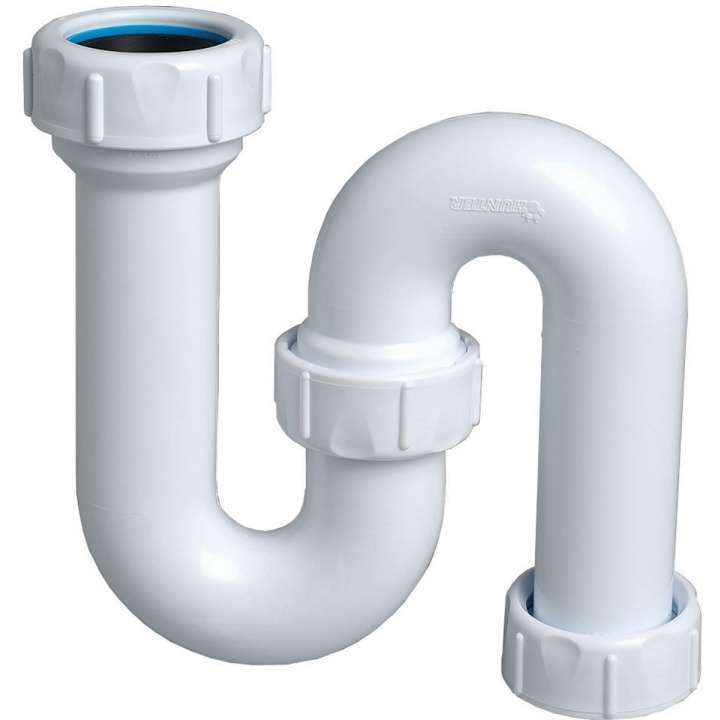
S-trap versus P-trap
A P-trap has a water-filled bend followed by a horizontal trap arm that connects to a properly vented drainage system. An S-trap drops vertically after the bend, which can pull water from the trap as the fixture drains.
Why the trap seal matters
The retained water blocks sewer gases and pests from moving through the drain opening. A siphoned, leaking, or dry trap may allow odor into the building.
Signs of an S-trap problem
- Visible second downward turn below a sink.
- Gurgling as the fixture drains.
- Recurring sewer odor after use.
- Trap water disappearing.
- Improvised fittings or flexible accordion piping.
Common correction approaches
A plumber may reconfigure the fixture to a P-trap and connect it to an approved vented trap arm. Depending on the building and adopted code, correction may involve an existing vent, a new vent, or an approved air-admittance valve where permitted and properly located.
An air-admittance valve allows air into the system but does not release positive pressure and does not eliminate every required exterior vent. It must remain accessible and follow its listing and local rules.
Other trap defects to address
- More than one trap in series.
- Leaking slip joints or corrosion.
- Excessive or improper slope.
- Flexible corrugated drain components.
- Trap too deep or positioned incorrectly.
- Unvented or improperly vented trap arm.
Frequently asked questions
Are S-traps allowed in new work?
They are generally not accepted in modern plumbing installations because of siphon risk. Existing conditions and corrections should be evaluated under applicable requirements.
Can I convert one by adding a longer horizontal pipe?
Not automatically. Proper trap-arm length, slope, fitting arrangement, and venting all matter.
Why does the sink smell only sometimes?
Intermittent siphoning, leakage, a dry trap, biofilm, or another drainage defect can produce occasional odor. The source should be confirmed.
Buyer checklist
- Look at the drain path below each accessible sink.
- Note gurgling, leakage, corrosion, and odor.
- Confirm whether a vent or approved valve is present.
- Obtain a plumber’s repair scope for improper configurations.
Related resources

Pingback: Do You Need A Home Inspection? November 2021 – GGR Home Inspections