Growth on an Air Handler: Moisture Causes and Corrective Steps
Dark or fuzzy material on an air-handler cabinet signals a moisture and cleanliness issue, but appearance alone cannot identify mold species or health significance.
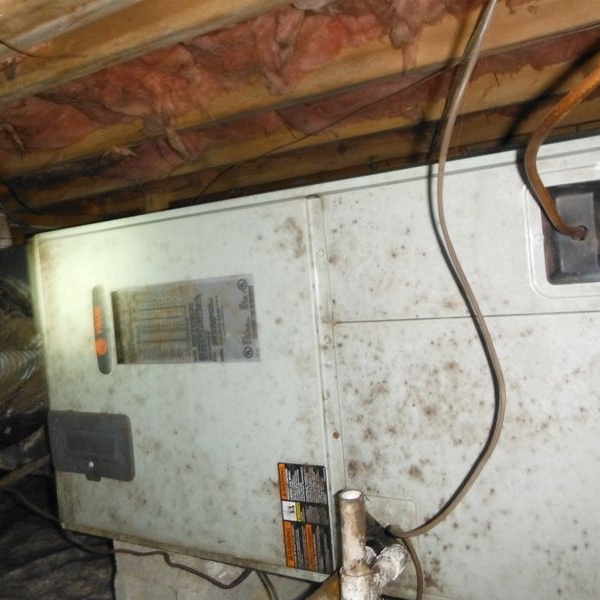
Condensation, sweating ducts, drain problems, air leakage, high indoor humidity, and dirty surfaces can keep an air handler damp enough for microbial growth.
Find the moisture source
Check cabinet insulation, refrigerant-line insulation, condensate pans and drains, return-air leakage, filter fit, and nearby attic or closet humidity.
A cold metal surface below the surrounding air’s dew point can collect condensation.
Correct HVAC conditions
An HVAC professional can evaluate airflow, refrigerant operation, cabinet sealing, drainage, insulation, and equipment sizing.
Oversized equipment may cool quickly without providing adequate moisture removal.
Clean safely
Use methods appropriate for the material and equipment. Porous insulation or heavily contaminated components may require replacement.
Do not spray unapproved chemicals into occupied air pathways or disturb large affected areas.
Warning signs to address
- Water below the air handler
- Clogged or overflowing drain
- Sweating cabinet or ducts
- Musty odor at supply registers
What a home inspection can document
An inspector can document visible moisture, drainage, insulation damage, staining, and apparent growth. Laboratory identification and remediation scope require qualified specialists.
A visual inspection cannot predict every failure or replace evaluation by the appropriately licensed specialist. It can identify visible concerns, explain why they matter, and help owners plan qualified follow-up.
Need a clearer picture of the property?
GGR Home Inspections provides clear, photo-documented inspections across Miami-Dade, Broward, Palm Beach, and St. Lucie counties.