

Practical homeowner guide
When Should Attic Insulation Be Removed?
Old insulation does not automatically need removal. Replacement makes sense when contamination, saturation, damage, unsafe materials, or planned repairs prevent the existing insulation from performing safely.
Old insulation does not automatically need removal. Replacement makes sense when contamination, saturation, damage, unsafe materials, or planned repairs prevent the existing insulation from performing safely.
Reasons removal may be appropriate
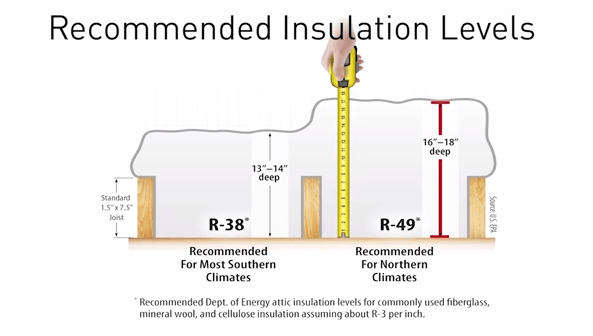
Removal may be considered after significant roof leakage, sewage or animal contamination, extensive pest activity, fire or smoke damage, or when insulation blocks necessary repairs. Severely compressed or mixed material may also complicate a planned upgrade.
Identify hazardous materials first
Some older insulation or nearby building materials may contain asbestos or other hazards. Suspect material should be evaluated by a qualified professional before disturbance. Ordinary vacuum equipment and unprotected handling can spread fibers and contaminants.
Correct the source before replacement
Repair roof leaks, pest entry, failed ducts, unsafe wiring, and ventilation defects before installing new insulation. Otherwise the new material can become damaged and the original problem may be concealed.
Protect the house during the work
Professional removal normally uses containment, appropriate filtration, protective equipment, and a controlled path out of the home. Recessed lights, junction boxes, vents, and access routes require careful treatment.
Inspection perspective
A home inspector can document accessible staining, deterioration, pest evidence, inadequate coverage, and visible safety concerns. Laboratory identification, remediation design, and clearance testing are separate services.
Frequently asked questions
Can a home inspection confirm every hidden condition?
No. A standard inspection is visual and non-invasive. Accessible evidence is documented, and further specialist evaluation is recommended when needed.
When should a specialist be called?
Seek qualified help when there is an active safety concern, water intrusion, uncertain installation, specialized testing need, or repair beyond ordinary homeowner maintenance.
Related resources


Pingback: Understanding R-Value Per Square Inch: 2023 Guide – GGR Home Inspections
Pingback: Attic Insulation How Much – GGR Home Inspections
Pingback: Installing An Air Conditioner In Your Garage - GGR Home Inspections