

Practical homeowner guide
Above-Ground Septic Systems: What Buyers Should Know
Understand mound systems, permits, pumps, warning signs, and the specialized septic checks buyers should request.
“Above-ground septic tank” is a common search phrase, but homeowners are often looking at a mound or raised drainfield system. In a typical mound system, wastewater first enters a septic tank, then a pump or dosing chamber sends effluent to an elevated sand mound for treatment and dispersal.
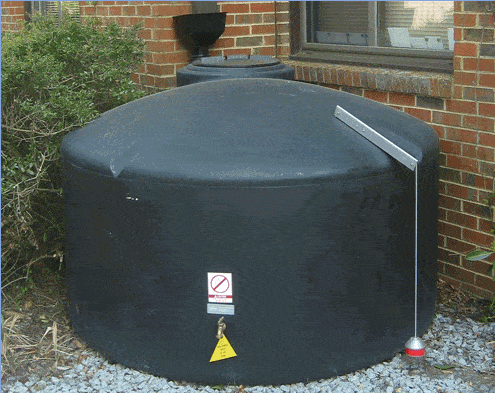
Why a septic system may be raised
The U.S. Environmental Protection Agency identifies mound systems as an option where a property has shallow soil, high groundwater, or shallow bedrock. Elevating the treatment area creates additional suitable material between the distribution piping and limiting site conditions.
A mound system is engineered for a particular site and expected wastewater flow. It is not a do-it-yourself substitute for a conventional drainfield.
How a mound septic system works
- Wastewater enters the septic tank. Solids settle, scum floats, and wastewater receives primary treatment.
- Effluent moves to a dosing chamber. A pump, controls, and alarm may be used to manage delivery.
- Effluent is sent to the mound. Distribution piping doses the elevated treatment area in controlled amounts.
- Sand and soil provide treatment. Effluent filters through specified material before dispersing into native soil.
What buyers should verify
- Construction, repair, and operating permits available for the property.
- Approved site plan showing the tank, pump chamber, mound, and reserve area.
- Maintenance or pumping records and any alarm or pump service history.
- Whether additions, pools, driveways, landscaping, or grading encroach on the system.
- Signs of ponding, sewage odors, erosion, settlement, or vehicle traffic over components.
- Whether the system type requires an operating permit or maintenance agreement.
Florida permitting considerations
Florida regulates onsite sewage treatment and disposal systems under state rules, and local requirements may be more restrictive. A site evaluation and construction permit are normally part of installing, repairing, modifying, or abandoning a system.
Permit responsibility is transitioning in phases between state programs, so owners should check the current process with the applicable county health department and Florida Department of Environmental Protection resources. Do not rely on an old article or seller statement to determine current requirements.
Maintenance and warning signs
Protect the mound and drainfield
Keep vehicles, heavy equipment, structures, and deep-rooted landscaping away from the treatment area. Do not change grading or direct roof and surface drainage toward the mound.
Respond to alarms promptly
A pump or high-water alarm can indicate a power, control, pump, or hydraulic problem. Reduce water use and contact a septic professional rather than repeatedly silencing the alarm.
Watch for surface symptoms
Persistent wet areas, odors, unusually green growth, slow drains, sewage backups, or erosion deserve professional evaluation. A lack of visible symptoms does not prove the system is functioning correctly.
Home inspection versus septic inspection
A general home inspection may document visible site conditions and readily observable concerns, but it does not replace pumping, opening tanks, testing pumps, evaluating absorption capacity, or certifying system performance. Buyers should obtain a specialized septic evaluation from a qualified provider when the property uses onsite wastewater treatment.
Above-ground septic questions
Is the septic tank itself always above ground?
No. In a mound system, the elevated feature is commonly the treatment and drainfield area. Tanks and pump chambers may be buried or partly buried depending on the approved design.
Can a mound system work near a high water table?
It can be designed for certain sites with high groundwater, but suitability depends on a professional site evaluation, engineered design, permits, installation, and maintenance.
Can a homeowner install one without a permit?
Do not assume so. Florida requires permits for onsite-system construction and many repairs or modifications, and local rules may add requirements.
Does a standard home inspection certify the septic system?
No. A specialized septic inspection is a separate evaluation and may involve tank access, pumping, component testing, and record review.
Buyer checklist
- Identify the actual system type from permits.
- Locate the tank, pump chamber, mound, and reserve area on the approved plan.
- Review pumping, maintenance, and repair records.
- Ask whether alarms and pumps are present and operational.
- Order a specialized septic evaluation before closing.
- Budget for ongoing maintenance and eventual repair or replacement.
Related resources